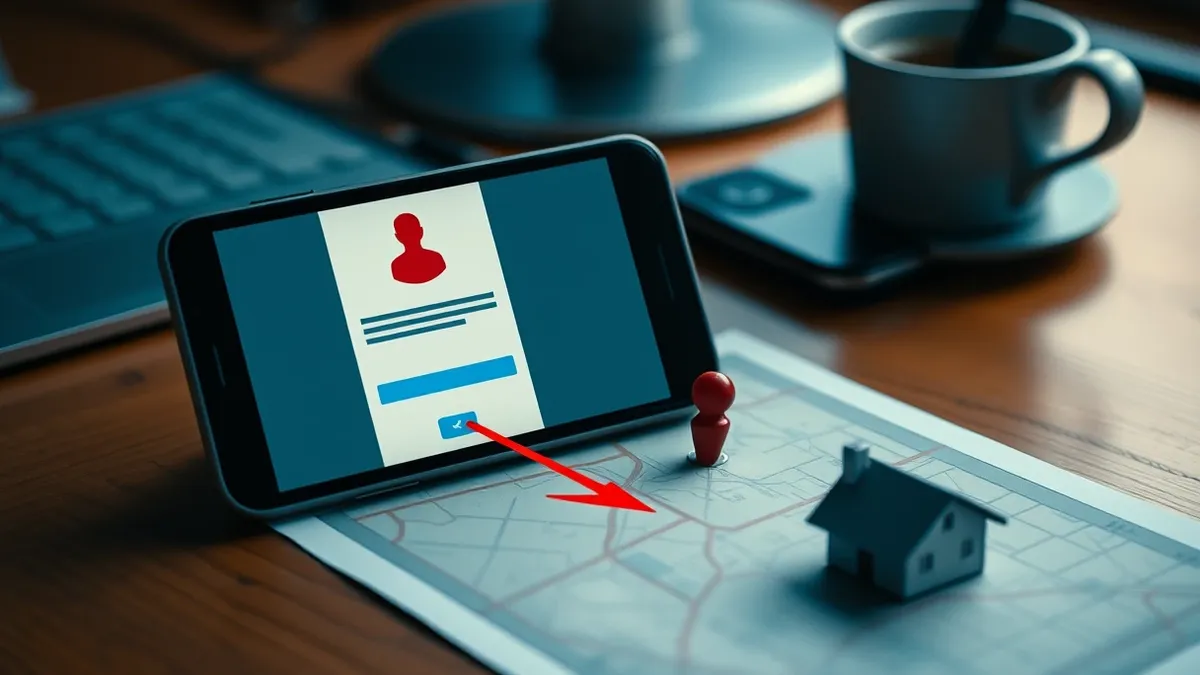
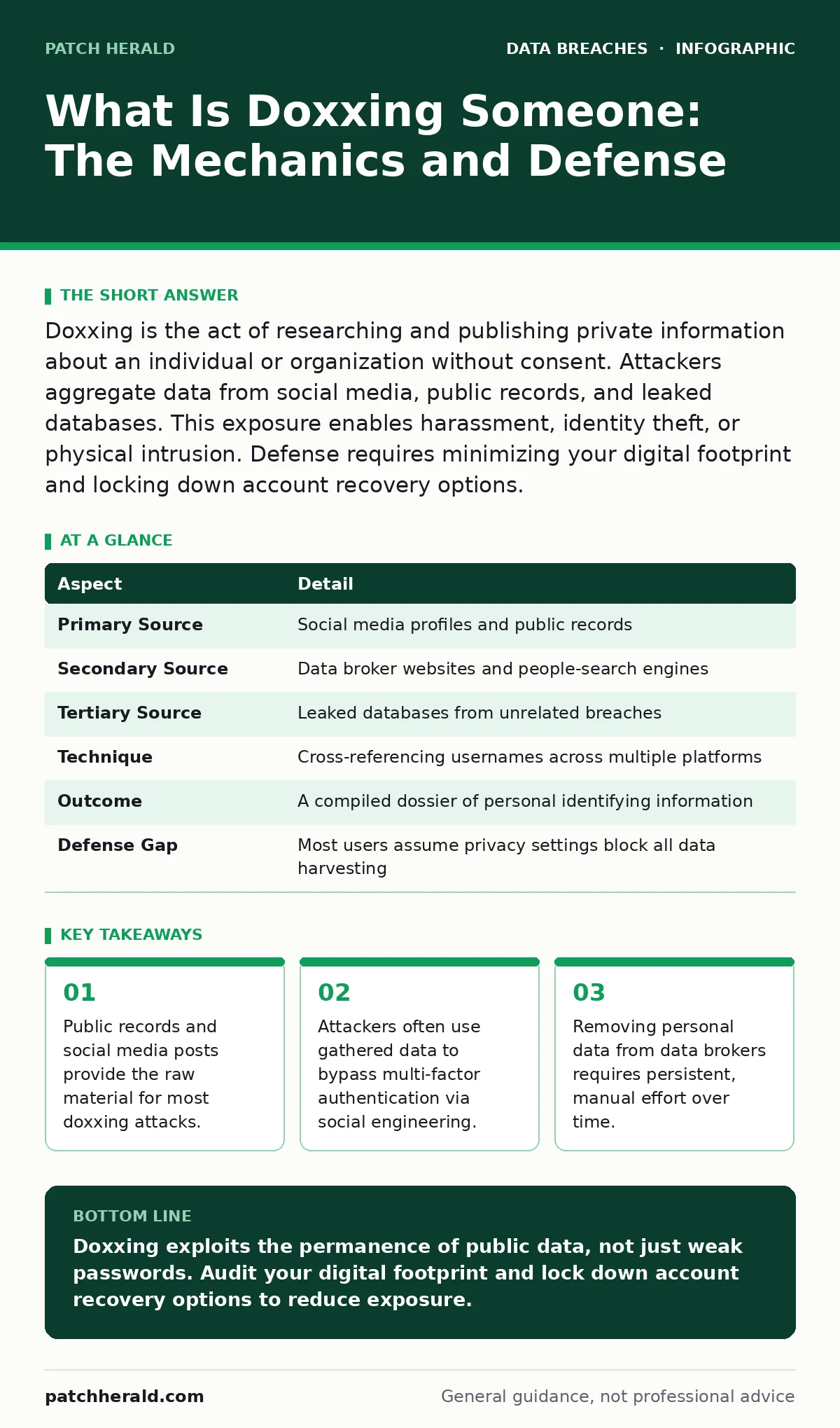
Doxxing is the act of researching and publishing private information about an individual or organization without consent. Attackers aggregate data from social media, public records, and leaked databases. This exposure enables harassment, identity theft, or physical intrusion. Defense requires minimizing your digital footprint and locking down account recovery options.
What Is Doxxing Someone
What is doxxing someone? It is the malicious publication of private or identifying information. The term derives from "documents," reflecting the early hacker practice of sharing internal files. Today, it refers to aggregating personal data from disparate sources. Attackers combine these fragments to create a detailed profile. This profile reveals home addresses, phone numbers, family members, and employment details. The goal is rarely just exposure. The goal is to enable harassment, fraud, or physical harm. You lose control over how your data moves through the internet.
The Mechanics of Data Aggregation
Doxxing relies on open-source intelligence techniques. Attackers do not always hack systems directly. They scrape publicly available information. Social media profiles often contain geotags, school names, and photos of mail. Public record databases list property ownership and court filings. These sources are legal and accessible. Attackers use automated tools to cross-reference these datasets. They link a username to an email address. They link that email to a phone number. They link the phone number to a physical address. This process creates a chain of custody for your identity.
| Aspect | Detail |
|---|---|
| Primary Source | Social media profiles and public records |
| Secondary Source | Data broker websites and people-search engines |
| Tertiary Source | Leaked databases from unrelated breaches |
| Technique | Cross-referencing usernames across multiple platforms |
| Outcome | A compiled dossier of personal identifying information |
| Defense Gap | Most users assume privacy settings block all data harvesting |
Who Is Affected by Doxxing
Anyone with a digital presence is a potential target. Small business owners face unique risks. Your business address may be your home address. Your personal email may handle customer support. Attackers target you to disrupt operations. They may register your domain name after you lose access. They may file fake tax documents using your identity. This overlaps with tax identity theft strategies. You lose control of your business infrastructure. Employees may become secondary targets. Their personal data is often easier to find than yours. This creates a chain of vulnerability.
A Hypothetical Scenario
Common Misconceptions About Privacy
Many users believe privacy settings stop doxxing. This is incorrect. Privacy settings limit who can see your posts. They do not remove your data from search engines. They do not stop data brokers from collecting your information. Data brokers aggregate public records and sell access. They operate legally in many jurisdictions. Deleting your social media account does not remove cached copies. Search engines index pages for years. You must actively request removal. This process is slow and often incomplete.
Another misconception is that strong passwords prevent doxxing. Passwords protect account access. They do not protect already published data. If an attacker finds your address on a public record, your password strength is irrelevant. They do not need to log into your account. They need to know where you live. This separates technical security from identity security. You need both layers of defense.
See also: What Is Database Activity Monitoring and Why It Matters · When Can Protected Health Information Be Disclosed Without Authorization
Immediate Response Steps
If you suspect doxxing, act quickly. Document everything. Save screenshots of the published information. Note the time and source. This evidence helps law enforcement. It also helps platforms remove content. Contact the hosting platform immediately. Most platforms have policies against harassment. They will remove content if you provide proof. Change your passwords immediately. Enable multi-factor authentication on all accounts. Use an authenticator app, not SMS. SMS can be intercepted via SIM swapping.
Long-Term Prevention Strategies
Prevention requires reducing your digital footprint. Audit your social media settings. Remove geotags from photos. Disable location services for social apps. Review public records for accuracy. Dispute incorrect information with the issuing agency. Opt out of data broker sites. This requires visiting each site and submitting a removal request. The process is tedious. It must be repeated periodically. New brokers appear regularly.
Secure your account recovery options. Attackers often use doxxed data to reset passwords. They answer security questions using public information. Use generic answers for security questions. Store the real answers in a password manager. Consider full disk encryption for your devices. If a device is stolen, data remains inaccessible. This limits the damage from physical theft.
Protecting Your Organization
Businesses must separate personal and professional data. Use business email addresses for all customer interactions. Do not use personal email for business registration. Register your domain through a privacy service. This hides your personal contact information from public WHOIS databases. Ensure your website does not display employee home addresses. Use a general office address for contact pages. Train employees on social media hygiene. They should not post sensitive operational details.
Review your data breach response plans for doxxing scenarios. Standard plans focus on data loss. Doxxing focuses on identity exposure. Update your plans to include public relations steps. Include steps for changing contact information. Include steps for securing physical locations. Coordinate with legal counsel. Understand your data subject rights in your jurisdiction. These rights may allow you to request data deletion from certain entities.
The Role of Technical Controls
Technical controls support but do not solve doxxing. Mobile device management helps enforce security policies on company devices. It ensures devices are encrypted and updated. It prevents data leakage from lost devices. However, it does not stop data brokers. It does not remove past posts. You must combine technical controls with operational discipline. Monitor for new mentions of your name or business. Use alerts to detect new publications. Respond quickly to new exposures.
Key takeaways
- Public records and social media posts provide the raw material for most doxxing attacks.
- Attackers often use gathered data to bypass multi-factor authentication via social engineering.
- Removing personal data from data brokers requires persistent, manual effort over time.
Doxxing exploits the permanence of public data, not just weak passwords. Audit your digital footprint and lock down account recovery options to reduce exposure.
Frequently asked questions
Can I sue someone for doxxing me?
Laws vary by jurisdiction. Some regions have specific laws against doxxing. Others rely on harassment or defamation statutes. Consult a legal professional to understand your options.
How do I remove my data from people-search sites?
Visit each site and look for opt-out instructions. Submit the required forms. This process is manual and must be repeated. Some sites require proof of identity.
Is doxxing illegal everywhere?
No. Many jurisdictions allow the publication of publicly available information. Illegal doxxing usually involves stolen data or threats. The legality depends on the source of the data and the intent.
Can blocking users on social media stop doxxing?
No. Blocking prevents direct interaction. It does not remove already published data. It does not stop data brokers. Attackers can use screenshots or cached pages.
How this guide was produced: written by the Patch Herald editorial team with AI assistance, checked against the public references listed below, and reviewed when the facts change. See our editorial policy or report an error.