
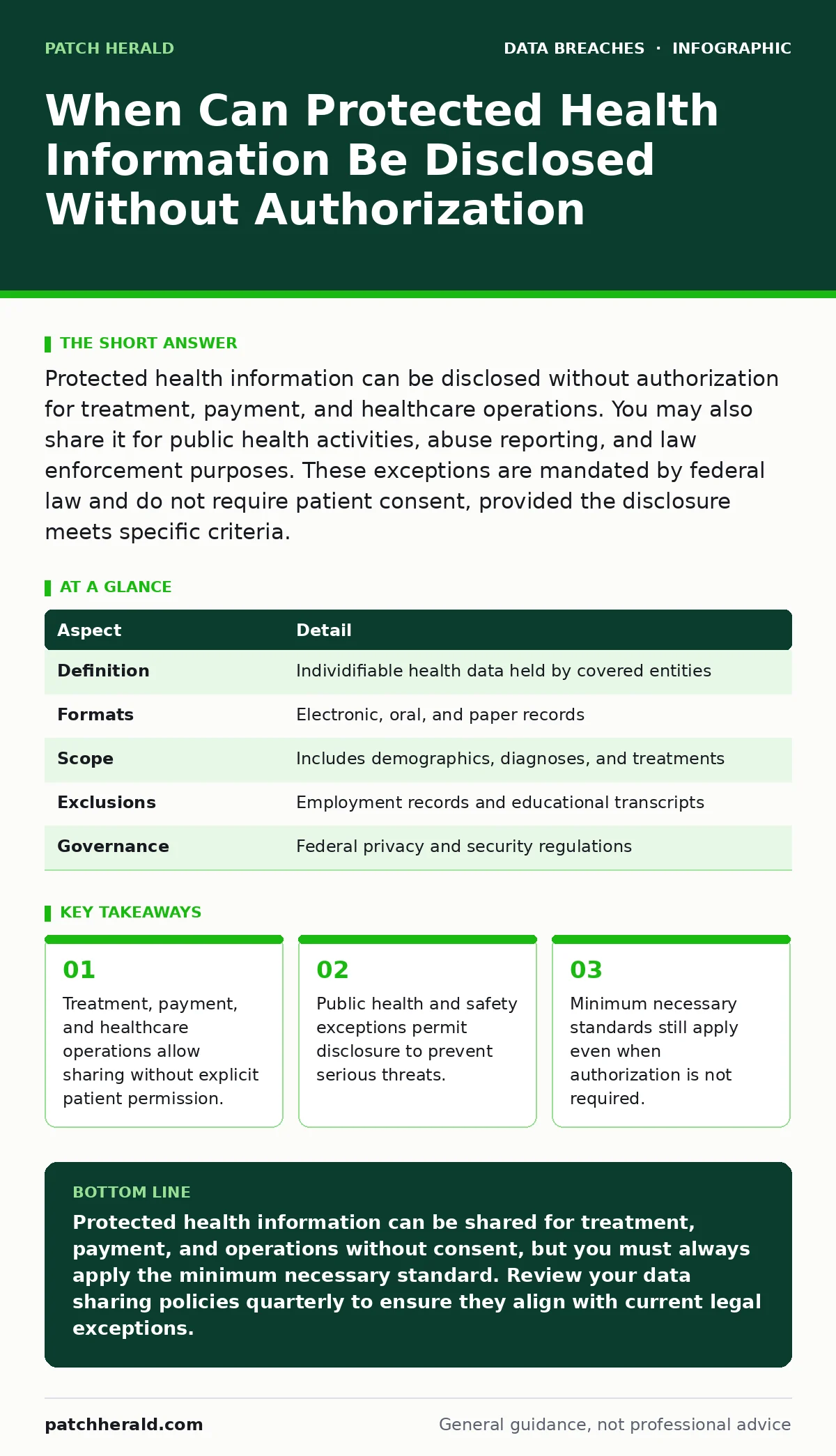
Protected health information can be disclosed without authorization for treatment, payment, and healthcare operations. You may also share it for public health activities, abuse reporting, and law enforcement purposes. These exceptions are mandated by federal law and do not require patient consent, provided the disclosure meets specific criteria.
Imagine a hospital emergency room. A patient arrives unconscious. The medical team cannot wait for a signed form to begin life-saving surgery. They share vital records with specialists immediately. This scenario illustrates the core tension in health data privacy. Legal frameworks must allow care to proceed while protecting sensitive details. The rules governing this balance are strict and specific.
What Is Protected Health Information
Protected health information refers to individually identifiable health data held by covered entities. This includes names, addresses, birth dates, and medical record numbers. It also covers diagnostic codes and treatment histories. The definition extends to electronic, oral, and paper records. If a record can identify a specific person, it falls under these protections. The rules do not apply to educational records or employment data. They apply strictly to health-related information.
| Aspect | Detail |
|---|---|
| Definition | Individifiable health data held by covered entities |
| Formats | Electronic, oral, and paper records |
| Scope | Includes demographics, diagnoses, and treatments |
| Exclusions | Employment records and educational transcripts |
| Governance | Federal privacy and security regulations |
When Can Protected Health Information Be Disclosed Without Authorization
When can protected health information be disclosed without authorization? The law permits this for three primary operational categories. First, treatment allows providers to share data with other clinicians. This ensures coordinated care across different specialties. Second, payment allows billing and insurance processing. Providers send records to payers to verify coverage. Third, healthcare operations include quality improvement and training. These uses are considered inherent to the function of a health system.
Operational Exceptions in Practice
These operational exceptions drive daily workflows. A primary care physician refers a patient to a cardiologist. The referral note contains protected health information. The cardiologist receives it without a new consent form. This is standard treatment sharing. Similarly, a hospital sends a claim to an insurer. The claim includes diagnosis codes. The insurer processes payment. This is a payment exception. Staff may also review cases for internal audit. This is a healthcare operation. These flows happen constantly.
Public Health and Safety Mandates
Public health objectives often override individual privacy preferences. Covered entities must report certain diseases to health departments. This helps track outbreaks and allocate resources. Mandatory reporting also applies to suspected abuse. This includes child, elder, and domestic violence. Law enforcement requests may also trigger disclosure. This happens when a court order exists. It also happens in cases of fugitive apprehension. These mandates serve broader societal interests.
The Minimum Necessary Standard
Even when authorization is not required, limits apply. The minimum necessary standard dictates sharing only what is needed. A therapist should not send full records for a simple refill. A specialist should not receive unrelated psychiatric notes. This standard prevents over-sharing. It reduces the risk of accidental exposure. Staff must assess the purpose of each disclosure. They must restrict the data accordingly. Failure to limit data can still result in penalties.
See also: Tax Identity Theft Definition: How Fraudsters Steal Your Refund · What Is Database Activity Monitoring and Why It Matters
What People Usually Get Wrong
Many believe consent is always required for health data. This is a common misconception. Operational needs often bypass this requirement. Another error is assuming all health data is protected. Fitness tracker data often falls outside these rules. Employer-sponsored wellness programs may also differ. People also confuse privacy with security. Privacy governs what can be shared. Security governs how data is protected. Both are necessary for compliance. Understanding data breach response plans helps clarify these distinctions.
Impact on Small Organizations
Small businesses face unique challenges in compliance. They may lack dedicated legal teams. They often rely on general IT staff. This increases the risk of misinterpretation. A small clinic might share too much data out of habit. A practice manager might not know the limits. Training becomes a primary defense. Staff must understand the specific exceptions. They must recognize when to stop sharing. Implementing mobile device management can help secure endpoints. This reduces the chance of accidental leaks.
Handling Data Subject Rights
Patients have rights regarding their health data. They can request access to their records. They can ask for corrections. They can request restrictions on certain disclosures. However, these rights have limits. They do not override treatment or public health mandates. A patient cannot block reporting of abuse. They cannot stop payment processing. Organizations must balance these rights with legal duties. Clear policies help manage these requests. Referencing data subject rights guides ensures proper handling.
Securing the Remaining Data
Protection does not end with disclosure rules. The data that remains must be secure. Encryption protects data at rest. Access controls limit who can view records. Audit logs track who accesses what. These technical measures support privacy goals. They provide evidence of compliance. They also mitigate risks from internal threats. Using password hygiene best practices prevents unauthorized access. Regular reviews of database activity monitoring logs identify anomalies. These steps form a layered defense.
Managing Cross-Border Data Flows
Health data often crosses borders in digital systems. Cloud servers may reside in other countries. This raises issues of data sovereignty. Different nations have different privacy laws. Organizations must ensure data stays within legal bounds. Contracts with vendors must specify location requirements. Technical controls can enforce these limits. Understanding these nuances prevents international violations. It also builds trust with patients.
Conclusion of Operational Duties
Compliance is an ongoing process. It requires knowledge of the law. It requires technical controls. It requires staff training. Organizations must stay current with changes. They must adapt to new threats. They must balance privacy with care. This balance is delicate but necessary. Following these rules protects patients. It also protects the organization. Proper handling of breach notification requirements completes the cycle.
Key takeaways
- Treatment, payment, and healthcare operations allow sharing without explicit patient permission.
- Public health and safety exceptions permit disclosure to prevent serious threats.
- Minimum necessary standards still apply even when authorization is not required.
Protected health information can be shared for treatment, payment, and operations without consent, but you must always apply the minimum necessary standard. Review your data sharing policies quarterly to ensure they align with current legal exceptions.
Frequently asked questions
Can I share health data with family members?
You may share relevant information with family if the patient agrees or if you judge it in their best interest. This is a permissive, not mandatory, disclosure.
Does this apply to dental records?
Yes, dental records are protected health information. They follow the same disclosure rules as medical records.
What if a patient asks to be excluded?
Patients can request restrictions, but these are not always granted. Treatment and public health mandates usually override patient preferences.
How do I handle a subpoena?
Verify the legal validity of the subpoena. Consult legal counsel before disclosing. Share only the specific data requested.
How this guide was produced: written by the Patch Herald editorial team with AI assistance, checked against the public references listed below, and reviewed when the facts change. See our editorial policy or report an error.